
2025 SDSN Annual Impact Report Catalyzing Interdisciplinary Science-Based Solutions For Sustainable Development
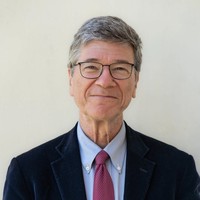
President’s Letter
We are living through a time of profound global disruption and change — and equally profound possibilities. The world faces mounting pressures: geopolitical competition, global financing and trade under threat, rapidly escalating climate risks, and a weakening commitment by some countries, notably the US government, to UN-based multilateral cooperation. Yet, at the same time, the international movement for sustainable development remains very much alive.
The most dynamic development progress is occurring in the emerging and developing countries of Asia, home to more than half of the world’s population. Africa, too, in the decades ahead, is poised to follow a similar upward trajectory.
At the core of the global progress are the United Nations Sustainable Development Goals (SDGs). The SDGs remain the world’s unified global framework for addressing poverty, inequality, climate change, and the long-term viability of our planet. Most of the world is strongly adhering to the aspirations of the SDGs.
Recent surveys show strong global public support for the UN system and the SDGs, yet implementation remains weak. While the UN has proven effective in agenda setting, it remains structurally weak in execution and financing, constrained by its dependence on major powers and the absence of robust global investment mechanisms.
As a new Secretary-General will be appointed this year, and governments begin to formally review the SDG agenda and define the post-2030 pathway, one theme will define the next phase: implementation.
This is where the UN Sustainable Development Solutions Network (SDSN) plays and will continue to play a key role—advancing education, analyzing and recommending public policies, building professional capacity, and helping to translate global commitments into practical action. Our focus is to identify where progress is possible, accelerate it, and help to design and build institutions capable of sustaining it. We don’t tilt at windmills. We help to install them!
I invite you to explore our 2025 Impact Report, highlighting the extraordinary work of our staff, networks, members, educators, and partners worldwide, to whom I am deeply grateful.
Together, achieving sustainable development globally is not merely an aspiration —it can and will be our shared global reality.
2025 By the Numbers
National & Regional Networks across 160+ Countries
Young People Reached by SDSN Youth
Learners Enrolled from 235 Countries & Territories
UN & Multilateral Engagements
Downloads of Reports & Policy Briefs
Of Policy & Academic Citations
Of Voluntary National Reviews Citing SDSN Research
Newsletter Subscribers
Unique Visitors to the SDSN Website
Mentions in News Outlets Worldwide
YouTube Views
Social Media Followers
Mobilizing a Global Network
Read the Full ChapterWe mobilize the world’s largest network of knowledge-generating institutions and youth leaders to identify and advance integrated science-based global and local solutions for sustainable development.

Members
Countries
National and Regional Networks
Strengthening National and Regional Action
In 2025, the SDSN expanded to 59 national and regional Networks, welcoming the SDSN Netherlands, Egypt, and Kuwait. Together, these 59 Networks coordinate more than 2,100 member institutions, including universities, research centers, think tanks, NGOs, and policy organizations, translating global goals into locally-led solutions shaped by national and regional priorities. This growing capacity was further bolstered by the launch of the SDSN Africa Center at Addis Ababa University, hosted by the Center for African and Asian Studies.
A Decade of Youth-Led Action for Sustainable Development
In 2025, SDSN Youth celebrated 10 years of empowering young leaders to advance sustainable development. New Youth Networks launched in Cameroon, Ghana, Italy, the Philippines, and South Africa, bringing the total to 20 Youth Networks spanning more than 45 countries. In 2025 alone, SDSN Youth’s initiatives collectively reached and impacted more than 6,500 young people, strengthening the pipeline of future leaders driving sustainable development worldwide.
Featured Programs
Education for Sustainable Development
Read the Full ChapterWe expand access to, and enhance the quality of, education and training that equips learners worldwide to drive sustainable development.

Scaling Access to World-Class SDG Education
In 2025, the SDG Academy expanded global access to high-quality education for sustainable development with the release of five new courses. The Academy also enrolled more than 95,000 learners from 235 countries and territories through its online offerings on edX. With a growing catalog of over 2,000 lectures, case studies, and event recordings, the SDG Academy continues to provide learners worldwide with accessible, interdisciplinary resources spanning business, energy systems, education policy, management, and history.
Embedding Sustainable Development in Classrooms Worldwide
In 2025, the Global Schools Program (GSP) added 318 pre-primary, primary, and secondary schools in 59 countries and 239,000 new students to its network of 2,000+ institutions. The Program was recognized by HundrED as one of the 100 most scalable and innovative education initiatives worldwide, underscoring its global relevance and impact.
Reimagining Global History & Leadership
In September 2025, the SDSN launched the alpha version of Ages of Globalization (AoG), a first-of-its-kind course led by Professor Jeffrey Sachs examining how 70,000 years of human history connect to today's greatest challenges. The launch marked the project’s one-year milestone and engaged educators, youth, and partners in rethinking global history and leadership for the 21st century.
Transforming Education Systems in Malaysia
In 2025, Mission 4.7 launched a strategic partnership with the School of Education at Sunway University to deliver a Training of Trainers (ToT) program for ESD. The inaugural cohort included 21 certified trainers, who will go on to train teachers in up to 40 schools, creating a nationwide multiplier effect and strengthening long-term educator capacity to embed sustainability across Malaysia’s education system.



SDG Monitoring & Accountability
Read the Full ChapterWe track global, national, and local SDG progress to inform government planning, guide long-term sustainable pathways, and ensure just climate transitions.

Measuring SDG Progress Worldwide
In June 2025, the SDG Transformation Center released the 10th edition of its flagship Sustainable Development Report (SDR), the most comprehensive assessment of progress across all 193 UN Member States on the SDGs. As part of the SDR 2025, the Center published an updated Index of Countries’ Support for UN-based Multilateralism (UN-Mi), offering a data-driven assessment of national commitment to the SDGs and the multilateral system. To support regional and national decision-making, the Center also partnered with institutions worldwide to deliver tailored regional and subnational analyses, including for Europe, the Arab region, and the Nordic region.
Aligning National Policy Pathways with the SDGs
In 2024, the SDSN signed a tripartite agreement with Agence Française de Développement (AFD) and Uzbekistan’s Ministry of Economy and Finance to strengthen SDG monitoring and align national policy pathways with the SDGs. As part of the partnership, in 2025, the Center conducted a two-day technical workshop in Tashkent, Uzbekistan, supporting government counterparts in applying SDG tools to policymaking.
Real-Time Data for Sustainable Development
In 2025, SDGs Today delivered a suite of new, high-impact data products to inform real-time decision-making, including a LinkedIn Hiring Rate and an African Wealth Assets dashboard produced in partnership with Wuhan University. These efforts received wide recognition, including the 2025 GEO SDG Award for work on mapping and monitoring marine litter in Ghana, highlighting the growing role of timely, granular data in advancing sustainable development action.
Featured Programs
Policy Shaping & Reform
Read the Full ChapterWe catalyze evidence-based policy and governance reforms across critical areas and sectors, including climate and energy, tropical forests, finance, food and land-use, health, peace, well-being, and cities.

Engineering-Based Solutions for the Energy Transition
In 2025, the Council of Engineers for the Energy Transition (CEET) strengthened the Secretary-General’s climate agenda by turning technical expertise into actionable solutions. The Council collaborated with partners, including the Enel Foundation, Sustainable Energy for All, and UNIDO, to produce three new issue briefs, translating technical expertise into actionable guidance for policymakers, industry leaders, and development practitioners.
Recognizing Student-Led Solutions for Climate Action
In 2025, the SDSN hosted the fourth edition of Universities for Goal 13 in partnership with Siemens Energy. The competition brought together more than 65 participants from eight universities across eight countries. Developed by students from Monash University, the winning project, “Turning algae into the future of clean industry,” received a USD 10,000 award to support further development, helping bridge academic innovation and real-world climate solutions.
Urging Action for the World’s Largest Tropical Forests
At COP30, the Science Panel for the Amazon (SPA), the Science Panel for the Congo Basin (SPCB), and the Science Panel for Borneo (SPB) sounded the global alarm on tropical forests with the launch of the 2025 Amazon Assessment Report and key findings from the forthcoming Congo Basin and Borneo assessments. Together, these assessments warn that the world’s three largest tropical forest biomes are under escalating and unprecedented pressure, threatening ecosystems that are foundational to global climate stability, biodiversity, and human well-being.
Developing Long-Term Pathways for Sustainable Food & Land-Use Systems
In 2025, the Food, Agriculture, Biodiversity, Land-Use, and Energy (FABLE) Consortium strengthened the evidence base for long-term food and land-use transformation, adding five new country teams. The Consortium released key policy briefs examining the equity and fairness in reducing agricultural emissions, highlighting pathways to align climate ambition with social justice, and introducing a conceptual and methodological framework for integrating resilience indicators into agrifood system models to support more robust planning under climate uncertainty.
Deepening GBA–ASEAN Collaboration
In 2025, the SDSN launched the Greater Bay Area–ASEAN Initiative (GAI), a platform to strengthen trade, finance, technology, and policy linkages between China’s Greater Bay Area (GBA) and the Association of Southeast Asian Nations (ASEAN). The initiative was formally inaugurated at the GBA–ASEAN Conference on Trade, Finance, and Sustainable Development, which brought together high-level leaders from government, academia, and the private sector.
Exploring SDG Financing Pathways in Benin
In 2025, the SDG Transformation Center deepened its collaboration with Benin’s Ministry of Economics and Finance to guide the country’s SDG monitoring and implementation strategy following its pioneering SDG Eurobond. In partnership with SDSN Benin, the Center developed policy briefs on innovative financing mechanisms, identifying institutional bottlenecks and opportunities to strengthen domestic resource mobilization, deepen capital markets, and align public and private finance with the SDGs.
Measuring World Happiness
In 2025, the Wellbeing Research Centre at the University of Oxford, in partnership with the SDSN and Gallup, and an independent editorial board, released the 13th edition of the World Happiness Report (WHR). As the world’s foremost publication on global wellbeing, the report draws from data from 140 countries, with the 2025 edition highlighting the central role of social trust and cohesion in fostering happiness.
Empowering Youth to Localize SDG 11
In 2025, SDSN Youth welcomed its eighth cohort of the Local Pathways Fellowship, a 10-month training and peer-learning program that equips young leaders with the tools, frameworks, and networks needed to localize SDG 11 (Sustainable Cities and Communities) in cities around the world. The Fellowship introduced a new training module on the Solutionary Framework, which strengthened Fellows’ capacity to design ethical and scalable responses to complex urban challenges.
Featured Programs





Global Convening & Influence
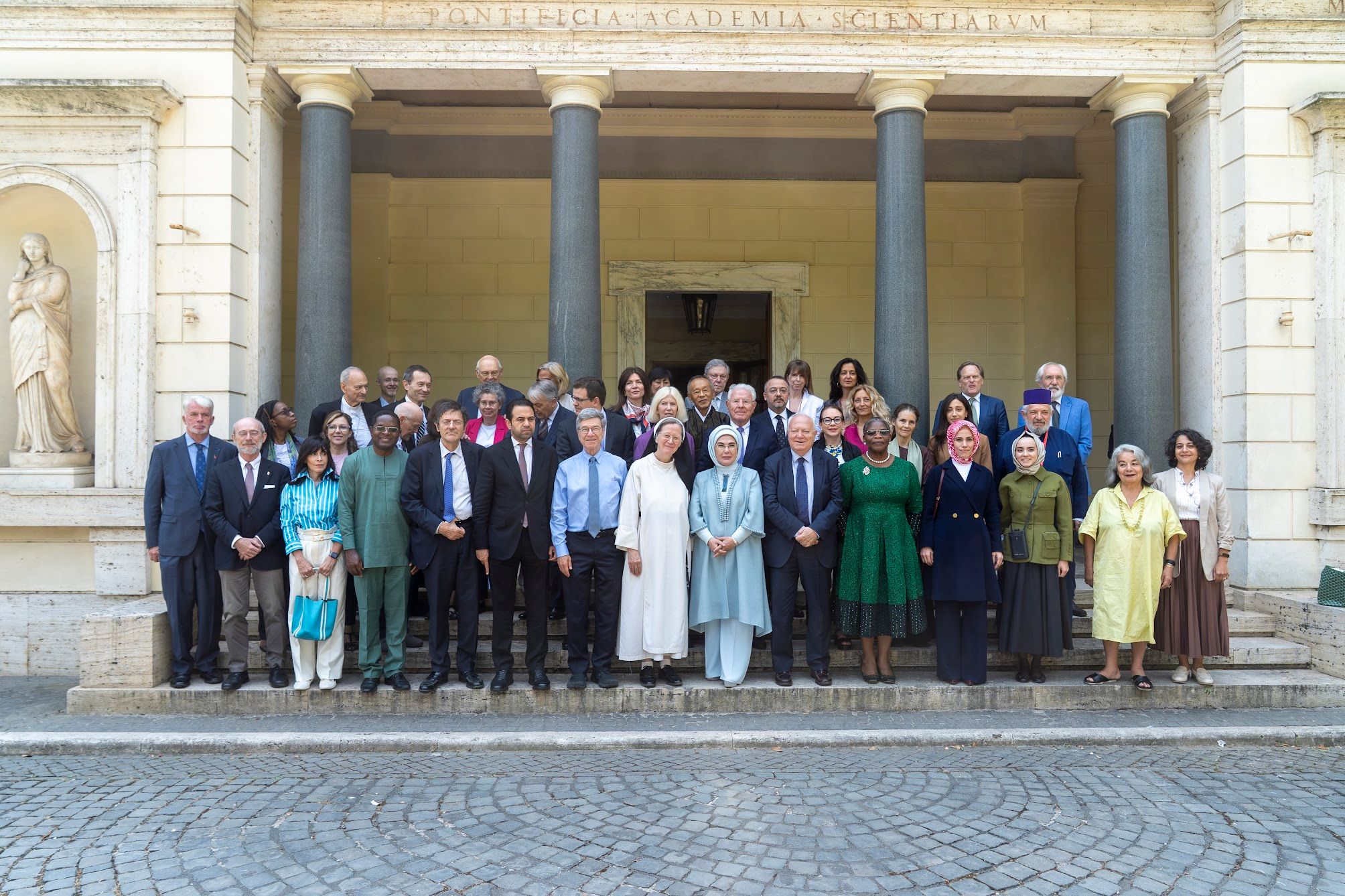
Read the Full ChapterWe convene and connect stakeholders, experts, and institutions worldwide, including UN bodies, governments, civil society, scientists, academia, and the private sector, to promote solutions for a more resilient, inclusive, and sustainable future.

Unlocking Capital for Sustainable Development
At the Fourth International Conference on Financing for Development (FfD4) in Seville, Spain, nearly 15,000 delegates gathered to discuss sustainable finance. The SDSN hosted high-level side events on unlocking capital for sustainable development, climate finance, education funding disparities, and shared key insights from the Sustainable Development Report 2025, helping catalyze investment-oriented action. In the lead-up to the FfD4, the SDSN released a statement on Financing for Development, outlining key reforms to the international financial architecture to be adopted at the conference.
Revisiting the UN Charter
In September 2025, the SDSN hosted a high-level Conference on Reform of the UN Charter, convening global leaders for strategic dialogue. Building on the 2024 Summit of the Future, the conference revisited the UN Charter, which has not been amended since 1973. Sessions examined amplifying underrepresented regions’ voices, veto power implications, financial mechanisms for sustainable development, and the relevance of Article 109, reinforcing discourse on strengthening global governance systems.
Forging New Partnerships with Key Organizations
In 2025, the SDSN forged strategic global partnerships to advance sustainable development. New collaborations included SustainChain™, a public-service platform by the U.S. Coalition on Sustainability, and the Global Enabling Sustainability Initiative (GeSI), promoting digital solutions for the SDGs.
Donate & Engage

Support the SDSN
The SDSN works with a myriad of donors across the sustainable development sector to accelerate the achievement of the SDGs and the Paris Agreement. Without their generous support, partnership, and giving, the SDSN’s work would not be possible.
The SDSN welcomes philanthropists, foundations, corporations, and other supporters to join us in advancing sustainable development worldwide. Every contribution helps move our efforts forward — strengthening our global network, expanding our reach, and enabling greater impact where it is needed most.
If you are interested in discussing ways to support our work through a gift, grant, or sponsorship opportunity, please contact info@unsdsn.org.
Become a Member
Knowledge-generating institutions can join the SDSN at no cost. Member institutions should have significant expertise in one or more areas related to sustainable development and commit to contributing substantially toward finding and implementing solutions for the SDGs. Member organizations can:
- Leverage the SDSN expertise for teaching, research, and local/national sustainable development.
- Access top-tier experts and young professionals working in sustainable development.
- Gain entry into the SDSN’s vibrant members-only platforms and peer-to-peer networking opportunities.
Connect with the SDSN
Follow the SDSN on social media to stay up to date on events, helpful resources, and more. Subscribe to the SDSN Newsletter to receive the latest insights, opportunities, and more directly in your inbox.